Profile
Dear Project Team,
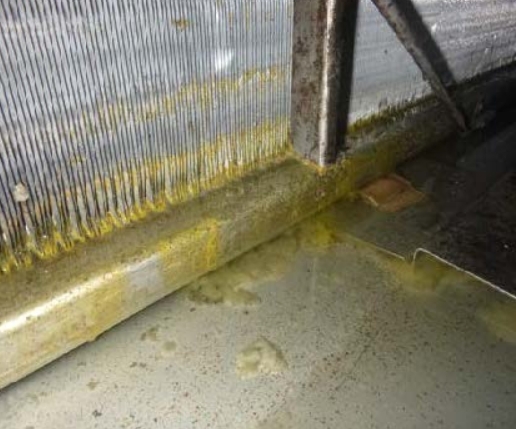
As part of the mechanical refurbishment works, I am proposing the integration of SAN-AIR vapour-phase antimicrobial products within the existing HVAC systems (AHUs, FCUs, split systems and cassette units). This solution directly addresses the mould, bacterial growth and IAQ issues we commonly observe in ageing systems — particularly where coils, return-air paths, ceiling plenums and condensate trays have accumulated microbial load over many years of operation.
This proposal is not a chemical fogging approach and does not rely on manual reapplication. Instead, SAN-AIR provides a passive, low-dose, vapour-phase antimicrobial release that works continuously inside the airflow path to suppress mould regrowth and improve indoor air quality during and after refurbishment activities.
1. Why This Design Solution Has Been Proposed
During HVAC refurbishments, the most persistent air-quality problems arise from:
-
historical mould contamination on coils and drain pans
-
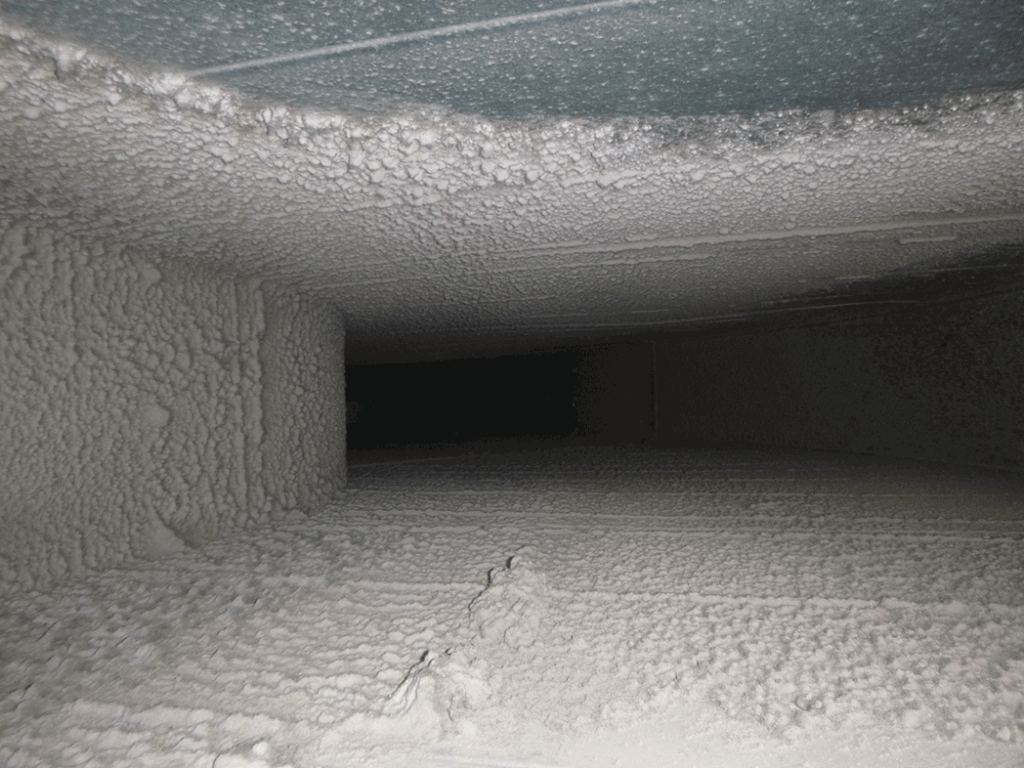
colonised return-air cavities in ceilings
-
stagnant air pathways that have not been cleaned in years
-
microbe-laden dust that resurfaces after construction activities
Even after coil cleaning or filter replacement, these systems quickly re-seed themselves unless microbial activity is actively controlled.
SAN-AIR addresses this design gap by releasing plant-derived vapour-phase molecules that diffuse through the air stream, penetrate microbial cell membranes, inhibit spore germination, and prevent regrowth on HVAC surfaces. This ensures the refurbishment does not simply “reset” the problem for a short period, but provides a sustained IAQ improvement as the building re-enters normal operation.
2. Benefits During Construction / Refurbishment
SAN-AIR provides practical advantages that reduce risk, disrupt fewer occupants and support a smoother commissioning period:
2.1 Continuous IAQ Protection
-
Works 24/7 during dusty phases, ceiling access works, coil cleaning, or unit reassembly.
-
Reduces airborne spores released when ceiling tiles are opened.
-
Helps stabilise IAQ while trades are active onsite.
2.2 Zero Downtime / Zero Power Requirement
-
No electrical connection, BMS integration or isolation needed.
-
Safe for installation ahead of occupied hours.
2.3 Targeted Action Inside Hidden HVAC Areas
-
Reaches coils, fan housings, return-air plenums and wall cavities that no wipe-down or spray can practically access.
2.4 Ideal for Ageing Assets
Older systems with limited access and older insulation benefit from an ongoing antimicrobial presence rather than one-off cleaning.
3. Benefits for Facilities Management & End Users
Post-refurbishment, SAN-AIR becomes part of the building’s IAQ strategy:
3.1 Reduced Microbial Regrowth
-
Fungal spores and bacteria are inhibited before they colonise newly cleaned coils or ductwork.
-
Supports compliance with IAQ expectations in education, healthcare, commercial offices and hospitality.
3.2 Fewer Odour Complaints
Vapour-phase treatment prevents the biofilm responsible for musky or musty odours.
3.3 Lower Maintenance Burden
By preventing regrowth:
-
coil cleaning frequency can reduce
-
filters remain cleaner for longer
-
AHU components remain free of contamination buildup
3.4 Improved Occupant Experience
-
Cleaner air
-
Reduced allergens
-
Reduced musty smells after refurbishment
-
Smoother handover and fewer warranty callbacks
5. Next Steps to Advance This Design Solution
If the project team wishes to adopt SAN-AIR as part of the refurbishment scope, the following steps can be completed quickly:
-
Confirm equipment list – AHUs, FCUs, splits, cassettes and any ceiling-plenum air returns.
-
Identify access points – filter doors, coil hatches, return-air grilles.
-
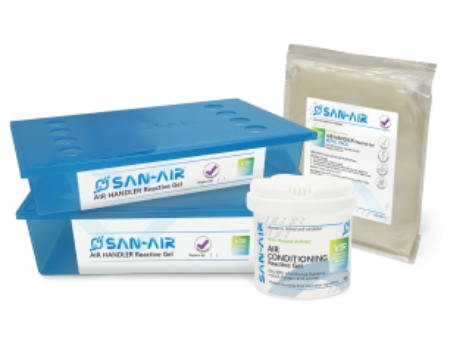
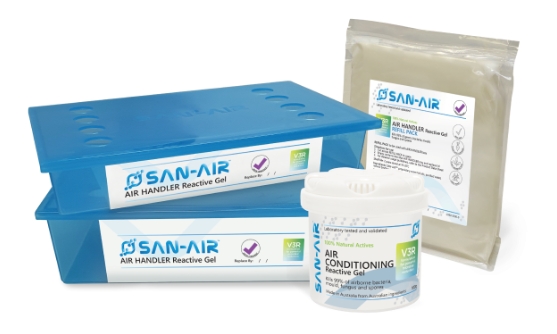
Select product format – gels for occupied-zone IAQ, HVAC blocks for units, cassette inserts for tight plenums.
-
Nominate installation timing – typically aligned with coil cleaning and filter replacement.
-
Include replacement cycles – every 6–8 weeks depending on airflow and temperature.
I am happy to run through these steps with you and match products to each item of plant.
Technical Notes – How SAN-AIR Will Support Your Project
SAN-AIR provides:
-
Product selection advice based on coil size, airflow rate and equipment type.
-
Guidance on placement inside AHUs, FCUs and ceiling plenums.
-
IAQ monitoring tips for post-installation validation.
-
Refill timetable recommendations for FM teams.
To assist sizing, SAN-AIR will require the following information:
-
HVAC equipment schedule (unit types, airflow, locations)
-
Whether the building is occupied during works
-
Access constraints for split systems or ceiling plenums
-
Any pre-existing IAQ issues or odour complaints
Once provided, SAN-AIR can supply a site-specific placement plan.
Reviews
Comments are closed.