Profile
Why Melinex/Mylar Lining in Attenuators Is Imperative for Hygienic HVAC Applications
In healthcare, laboratory, cleanroom and other controlled‑environment ventilation systems, contamination control isn’t optional — it’s mandated by standards that explicitly require contaminant‑free, cleanable and non‑fibre‑releasing air path surfaces. Given engineering standards such as AS/NZS 3666.1:2011, ISO 14644‑1:2015 and AS/NZS 2243.3:2022 are referenced in legislation, design briefs, tenders, and compliance documentation, specifying suitable materials — such as Melinex®/Mylar® film linings — becomes a project‑critical specification item, not an afterthought.
HVAC Attenuation’s solutions are designed expressly to meet or exceed these exacting hygienic performance requirements in critical facilities such as:
AS/NZS 3666.1:2011 – Air‑handling and water systems of buildings — Microbial control
Clause 2.4.2 – Materials
“Materials used in air‑handling systems shall be selected to minimise the accumulation of dirt and moisture and shall not support microbial growth.”
Clause 2.4.3 – Cleanability
“Air‑handling system components shall be constructed so that they are accessible for inspection, cleaning and maintenance.”
Clause 2.4.4 – Surface condition
“Surfaces within air‑handling systems shall be smooth, impervious and free from crevices where dirt and moisture can accumulate.”
AS/NZS 2243.3:2022 – Safety in laboratories – Microbiological safety and containment
Clause 6.2.3 – Ventilation systems
“Ventilation systems shall be designed so that surfaces in contact with air are smooth, non‑absorbent and able to withstand cleaning and decontamination.”
Clause 6.2.5 – Contamination control
“Materials that may generate or trap contaminants shall not be used in containment ventilation systems.”
ISO 14644‑4:2016 – Cleanrooms and associated controlled environments – Design, construction and start‑up
Clause 4.2.1 – Construction materials
“Materials used in cleanrooms shall be selected to minimise the generation, retention and release of particles.”
Clause 4.3.4 – HVAC systems
“Air‑handling system components shall be designed and constructed so as not to become a source of contamination.”
State health infrastructure requirements reinforce the same position
Queensland Health — Capital Infrastructure Requirements, Volume 4
Clause 1.6.4.3
“All internal insulation within clinical areas shall be lined to facilitate infection control cleaning.”
“Exposed insulation or perforated foil faced insulation shall not be acceptable.”
Capital Infrastructure Requirements – Volume 4 Engineering and infrastructure Section 2: Manual
NSW Health — Engineering Services Guidelines
Clause 7.5.6
“…no internal insulation in clinical areas will have acoustic material lined with perforated foil or sheet steel without a membrane to prevent friable fibres entering the airstream.”
WA Health — Health Facility Guidelines
“Duct acoustic treatment incorporating fibreglass and mineral wool products shall not have fibres exposed to the airstream. Perforated facings shall have impervious linings.”
Melinex® and Mylar® films
Melinex® and Mylar® are biaxially‑oriented polyester (PET) films engineered to provide smooth, non‑porous, impervious internal surfaces within HVAC systems. These films prevent fibre migration from acoustic media, resist moisture and chemical attack, and remain dimensionally stable under HVAC operating conditions.
Without a continuous film lining, fibrous insulation will accumulate dust and moisture, shed fibres into the airstream, and cannot be effectively cleaned or disinfected. Perforated foil facings do not meet hygienic requirements, as fibres can migrate through perforations.
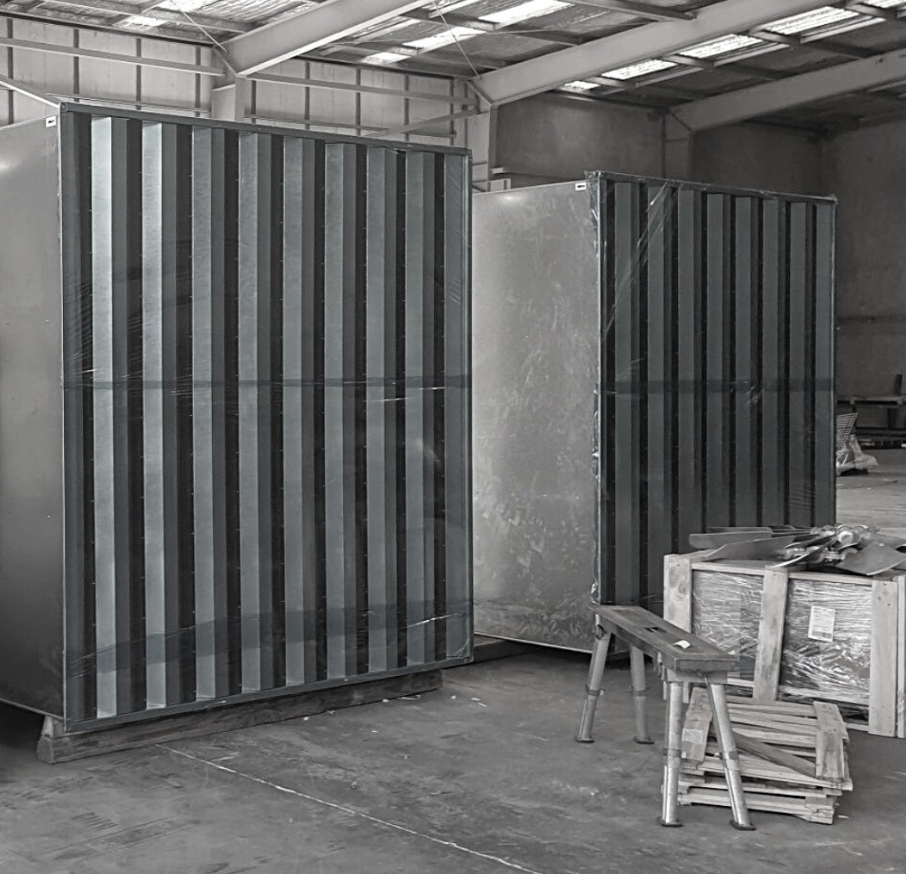
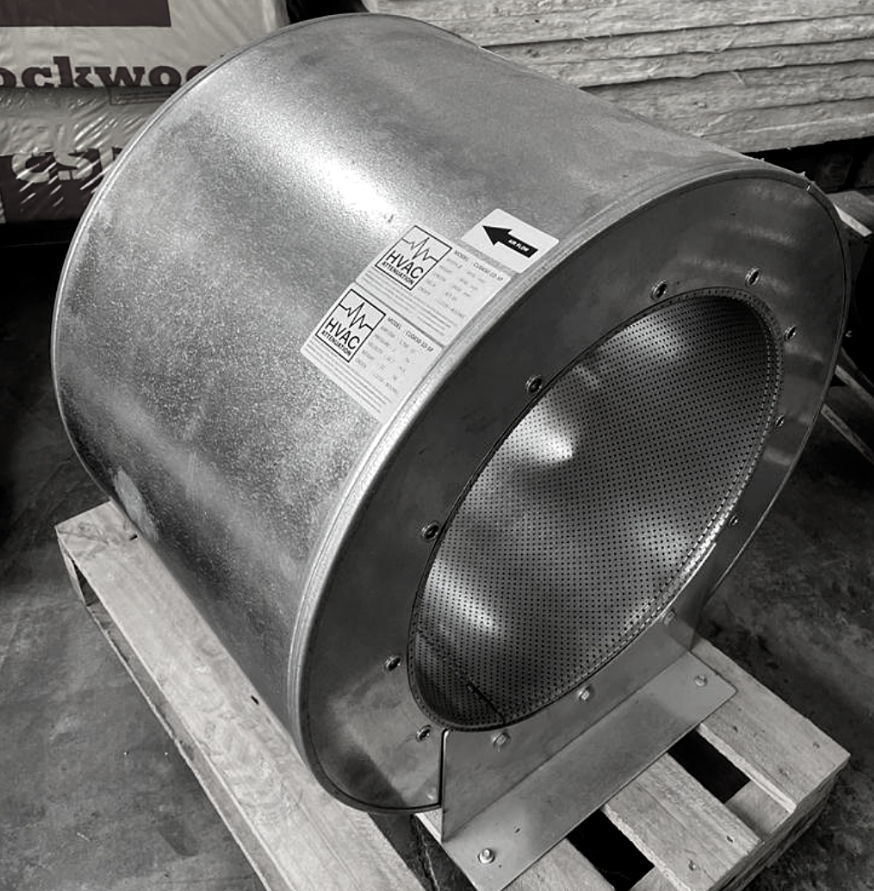
HVAC attenuators are the preferred solution for hygienic acoustic control. Purpose‑designed attenuators allow factory‑controlled installation of Melinex/Mylar linings, sealed edges, and documented acoustic and hygiene performance.
HVAC Attenuation specialises in custom‑engineered attenuators manufactured to order for hospitals, laboratories and cleanrooms. Their attenuators utilise continuous Melinex®/Mylar® film linings, avoid perforated internal facings, and deliver high acoustic performance while satisfying AS/NZS 3666, AS/NZS 2243 and ISO 14644 requirements.
Conclusion
Across Australian and international standards, internal HVAC surfaces must be smooth, impervious, cleanable, non‑absorbent and non‑fibre releasing. Melinex® and Mylar® film linings are not optional enhancements — they are essential compliance components wherever fibrous acoustic insulation exists within hygienic HVAC systems.
Find out more about linings for HVAC Attenuation range here Mylar and Melinex Film: Attenuation Fundamentals — HVAC Attenuation
Reviews
Comments are closed.