
Profile
Hospital HVAC Air Handling Unit Requirements in Australia
A technical engineering guide to compliance, infection control, and air handling unit design
Hospital HVAC systems in Australia are engineered to perform a clinical function. Unlike commercial buildings, where HVAC is primarily concerned with comfort and energy efficiency, hospital air handling systems are required to actively support infection prevention, pressure control, clinical risk management, and patient safety.
At the centre of this responsibility sits the air handling unit (AHU).
Across all Australian jurisdictions, hospital HVAC design is governed by a layered regulatory framework comprising the National Construction Code (NCC), referenced Australian Standards, the Australasian Health Facility Guidelines (AusHFG), and state or territory health infrastructure engineering requirements ( Please Refer to these for your state) . While the language and prescriptiveness of these documents varies by jurisdiction, their engineering intent regarding AHUs is highly consistent.
This article explains what Australian hospital codes are actually calling for in relation to AHUs, how the states interpret those requirements, and what that means for real-world AHU selection and design.
The national framework governing hospital AHUs
Australasian Health Facility Guidelines (AusHFG)
The Australasian Health Facility Guidelines form the primary national reference for healthcare facility design in Australia. For mechanical engineers, Part E – Engineering, supported by Part D – Infection Prevention and Control, establishes that HVAC systems and AHUs in particular are not comfort systems but clinical infrastructure.
AusHFG makes it clear that air handling systems in hospitals must be capable of delivering:
- stable and measurable pressure relationships between spaces
- verified ventilation rates aligned with room function
- filtration outcomes appropriate to clinical risk
- hygienic construction that supports inspection and cleaning, and long-term operational reliability over the full asset lifecycle.
In critical and high-risk areas such as operating theatres, intensive care units, isolation rooms and procedure spaces, the guidance consistently favours dedicated AHUs rather than decentralised or room-based systems.
Core AHU engineering requirements in Australian hospitals
AHU zoning and separation by clinical risk
One of the most fundamental principles embedded throughout AusHFG and state health guidance is risk-based zoning.
Hospital AHUs are required to be arranged so that air paths ( including ac air duct, ahu etc.) do not allow contamination to migrate from higher-risk spaces to lower-risk spaces. In practical terms, this means critical clinical areas are served by dedicated AHUs, clinical departments are often separated by air handling system, separate floors may be provided with separate air handling plant, and return air from high-risk spaces is not shared with other areas.
This zoning approach underpins infection control strategies and allows pressure regimes, filtration and operational modes to be managed independently for each clinical zone.
Pressure regime control as a clinical function
Australian hospital guidelines treat pressure control as a clinical requirement rather than a comfort outcome.
AHUs must be capable of maintaining stable pressure differentials under all expected operating conditions, including door openings, changes in occupancy or airflow demand, and partial plant operation or maintenance scenarios.
This requirement drives key AHU design decisions including preference for constant volume or tightly controlled variable volume systems in critical areas, stable fan selection with predictable operating curves, low internal leakage construction, and integration with room-level differential pressure monitoring and alarms.
Air conditioning filtration as a containment system
Hospital codes in Australia consistently reinforce that filtration must be treated as a containment system rather than simply filter media installed in HVAC systems.
AHUs are required to support multi-stage air conditioner filter systems compliant with AS 1324, with filtration stages selected to match the clinical risk of the spaces served. Importantly, ac filtration requires rigid filter frames, gasketed sealing, prevention of bypass leakage, differential pressure monitoring across each stage.
Where HEPA filtration is required, AHUs must be compatible with terminal or in-unit HEPA arrangements that can be tested, maintained and validated over time.
Hygiene, cleanability and infection control
AHUs in hospitals are treated as part of the infection control system. This leads to explicit expectations around hygiene and cleanability, including
- Internal construction materials suitable for cleaning and inspection,
- Fully drainable stainless steel condensate trays,
- Coil and drain designs that avoid standing water
- No exposed fibrous materials in the airstream and avoidance of acoustic treatments that trap contaminants.
State health authorities emphasise that long-term microbial risk is a lifecycle design issue, not a maintenance problem.
State-based interpretation of AHU requirements
Although the engineering principles above are consistent nationwide, individual states apply additional emphasis.
- New South Wales applies prescriptive requirements around AHU separation, non-recirculation from high-risk areas, and pressure monitoring.
- Queensland places strong focus on humidity control, condensate hygiene and robust AHU construction suited to hot and humid climates.
- Victoria emphasises maintainability, pressure regime stability under variable flow and the ability to physically prevent recirculation.
- Western Australia places particular emphasis on hygiene, fibre-free air paths and washable components.
- South Australia, the ACT, Tasmania and the Northern Territory largely adopt AusHFG and national standards through project-specific briefs.
Alignment of hospital AHU requirements with G.J. Walker air handling systems
When the intent of Australian hospital HVAC requirements is distilled, it becomes clear that hospitals are not simply specifying an AHU, but air handling infrastructure capable of delivering clinical outcomes reliably, verifiably and over the full lifecycle of the facility.
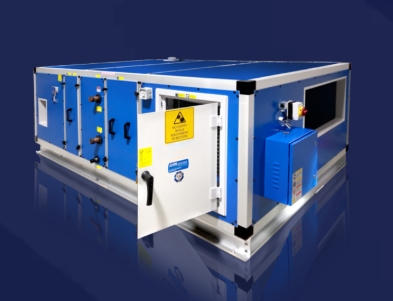
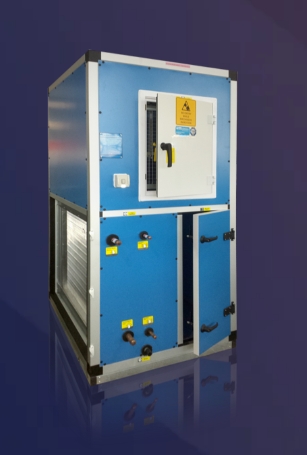
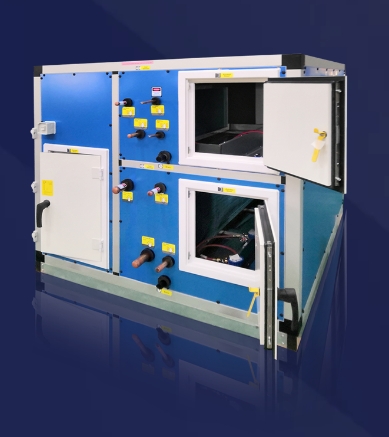
G.J. Walker air handling units align strongly with these requirements because their Australian design and construction reflects the engineering intent embedded in AusHFG and state health guidelines.
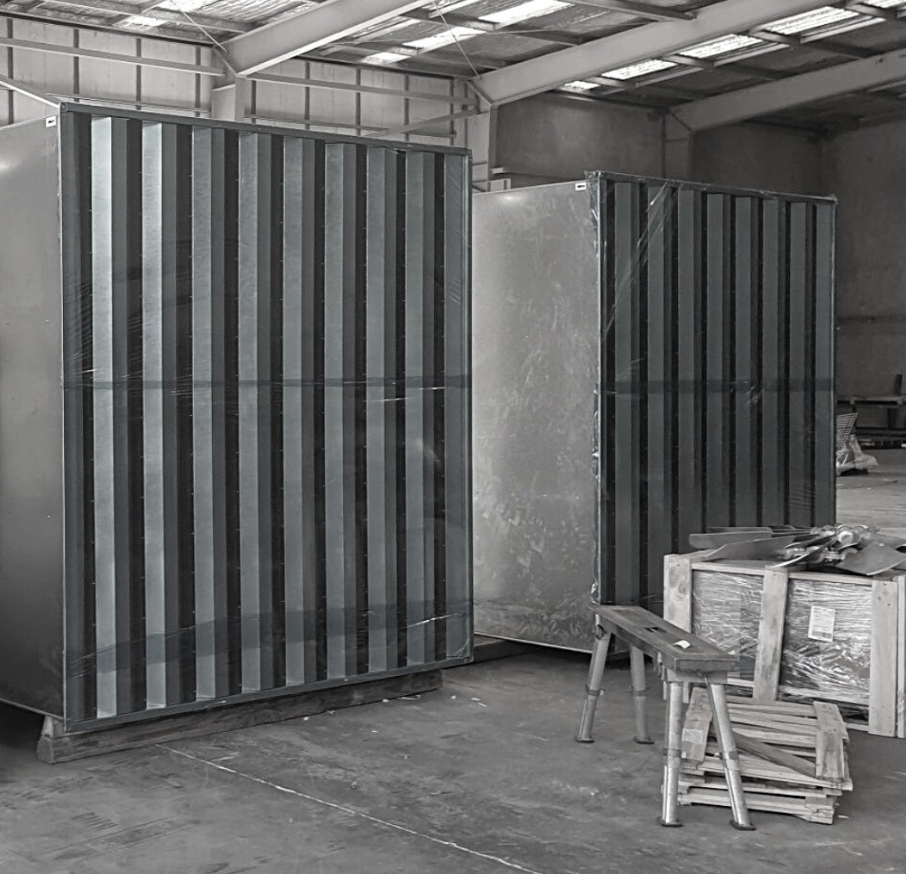
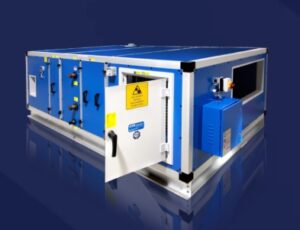
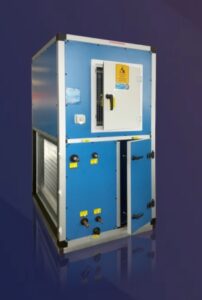
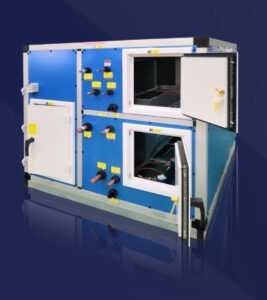
Their sectional and modular construction supports zoning and separation demanded in hospitals, allowing dedicated AHUs for theatres, ICUs, isolation suites and ward groupings. Physical separation of mixing, filtration, coil and fan sections aligns with requirements for non-recirculation and risk containment.
From a pressure control perspective, G.J. Walker AHUs are designed for stable and predictable airflow performance, supporting constant volume and tightly controlled variable volume strategies required to maintain clinical pressure regimes.
Filtration requirements are addressed through robust, gasketed filter bank construction, enabling sealed multi-stage filtration systems that deliver verifiable performance in line with AS 1324 and AusHFG expectations.
Hygiene and infection control requirements are supported through hospital-appropriate internal finishes, fully drainable condensate management and construction approaches that avoid exposed fibrous materials in the airstream.
From a lifecycle perspective, G.J. Walker AHUs are engineered as long-life infrastructure plant, with access, serviceability and robustness suited to continuous operation in healthcare environments.
Find out more: Air Handling Units — GJ Walker and case study: PROJECTS – Sunshine Hospital — GJ Walker

Reviews
Comments are closed.