Profile
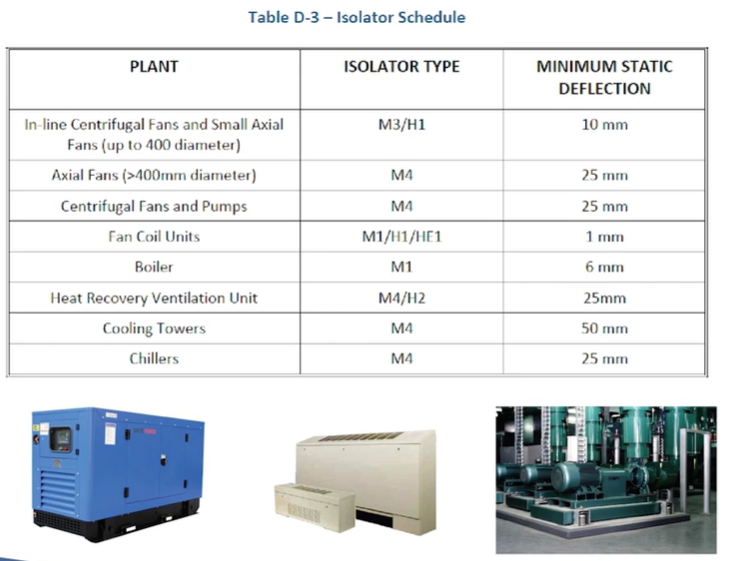
In many mechanical services specifications, vibration isolation performance is defined not by abstract theory, but by a single, measurable requirement: static deflection. The Embelton Engineering training video walks through why this parameter is specified, what it really means, and how it directly governs vibration isolation outcomes.
Rather than treating static deflection as a “tick-the-box” specification item, the session reframes it as the key link between plant mass, isolator stiffness, and natural frequency.
What Is Static Deflection – and Why It Matters
The training explains static deflection in clear physical terms:
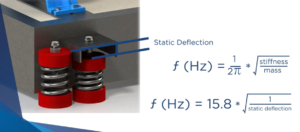
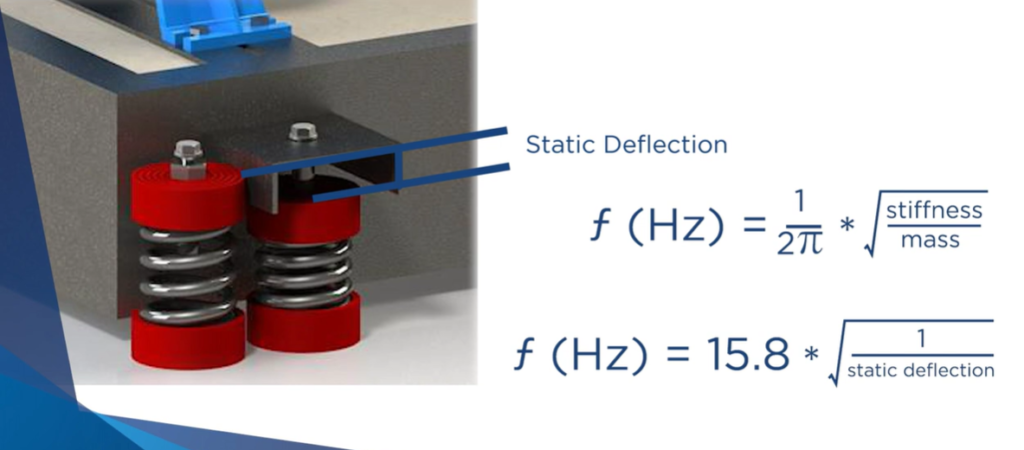
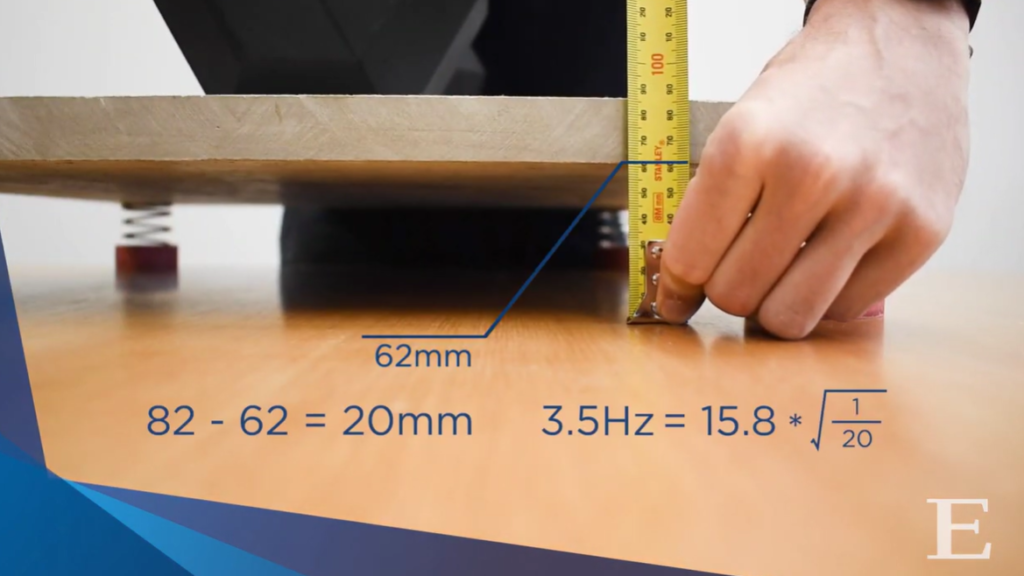
Static deflection is the amount an isolator compresses under the supported load, measured from its free (unloaded) height.
It represents the stiffness-to-mass relationship of the isolation system.
That relationship directly determines the natural frequency of oscillation, which is the fundamental parameter controlling isolation performance.
Once the natural frequency is known, engineers can assess how effectively vibration from rotating plant will be attenuated before it reaches the structure.
This is particularly important because vibration isolation only becomes effective above resonance. The greater the separation between operating speed and isolator natural frequency, the better the theoretical isolation.
Practical Demonstration: From Measurement to Performance
A key strength of the training is its practical, site-relevant approach.
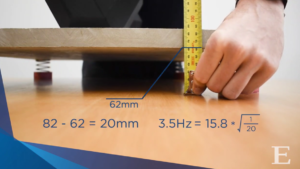
Using a simple test setup with spring isolators and a known platform, the engineer demonstrates that:
- Measuring static deflection on site is often simpler and more reliable than trying to reconstruct mass and stiffness data from legacy documentation.
- A tape measure and knowledge of the isolator free height are often all that’s required.
- Once static deflection is known, natural frequency can be calculated directly, without accelerometers or specialist instrumentation.
By incrementally adding mass and re-measuring deflection, the training visually shows how:
- Increased static deflection lowers natural frequency
- Oscillation periods lengthen
- Structural reaction forces reduce due to lower acceleration
These observations link theory directly to what engineers and contractors see on real plant decks.
Resonance, Operating Speed, and Specification Decisions
The session also reinforces a critical design principle that is often misunderstood:
Resonance occurs when plant operating speed coincides with isolator natural frequency
Effective vibration isolation only begins once operating speed is sufficiently higher than the isolator frequency
Therefore, acceptable static deflection must always be considered in the context of machine speed, not in isolation
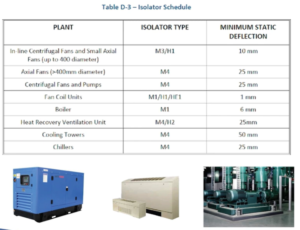
This is why static deflection values in specifications are not arbitrary — they are a proxy for ensuring adequate frequency separation and predictable isolation performance.
Important Caveat: Linear vs Non-Linear Isolators
The training does not oversimplify the topic. A clear limitation is highlighted:
Static deflection-based frequency calculations assume linear stiffness isolators, such as steel springs
For non-linear systems, including many rubber mounts, static deflection alone does not accurately predict natural frequency or isolation behaviour
This distinction is critical for designers selecting between spring, rubber, or composite isolation systems, particularly in sensitive applications.
Why This Training Is Valuable for Engineers and Contractors
This Embelton-led training is valuable because it:
- Translates vibration theory into measurable, site-relevant actions
- Helps engineers interpret mechanical specifications with confidence
- Supports better isolator selection during both design and construction
- Reduces the risk of underperforming isolation due to misunderstood deflection requirements
It is particularly relevant for HVAC plant, pumps, chillers, fans, and packaged equipment where vibration control is essential to compliance, asset longevity, and occupant comfort.
Learn More
For engineers who want to see the concepts demonstrated visually — including real measurements, excitation response, and side-by-side behaviour — the accompanying training video provides a clear and practical walkthrough.
If vibration isolation is part of your scope, it’s well worth taking a few minutes to watch and revisit how static deflection underpins isolation performance in the real world.
Reviews
Comments are closed.