Profile
Advanced air distribution design for modern HVAC applications – Shapeair AIRAH Training Presentation
Overview
Air distribution remains one of the most underestimated aspects of HVAC system performance. While load calculations and equipment selection receive significant attention, diffuser selection, throw characteristics and room air movement often determine whether a system actually performs as intended.
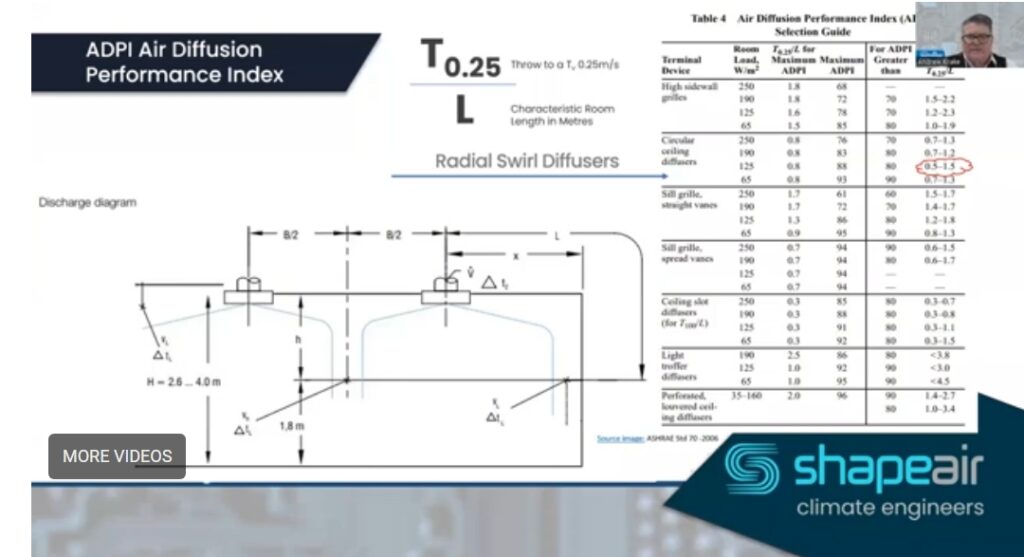
Shapeair’s AIRAH training presentation — Fundamentals of Air Distribution and Air Diffusion — provides a technical, engineer-focused session on air distribution fundamentals, diffuser selection and application-specific design considerations, aligned with real HVAC design challenges. 🔗 https://airah.org.au/site/site/education/webinars/2023/fundamentals-of-air-distribution-and-air-diffusion.aspx
Purpose of the AIRAH Training Session
The Shapeair AIRAH presentation is structured to support:
-
HVAC designers and consulting engineers
-
Mechanical contractors involved in design & construct projects
-
Commissioning engineers and air balancing professionals
-
Facilities teams seeking better indoor air performance outcomes
Rather than promoting products in isolation, the session focuses on how air distribution devices influence comfort, energy efficiency and compliance across a range of building types.
Key Technical Topics Covered
Fundamentals of Air Distribution
-
How diffuser selection impacts air throw, spread and induction
-
Relationship between supply air velocity and occupant comfort
-
Managing drafts, short-circuiting and stagnant zones
Diffuser Selection by Application
-
Office spaces and commercial interiors
-
Healthcare and clinical environments
-
Education and high-occupancy spaces
-
Industrial and large-volume areas
The presentation highlights how different diffuser geometries influence room air patterns and why “one diffuser fits all” approaches often lead to poor outcomes.
Ceiling, Architecture & Coordination Constraints
-
Integration of diffusers with architectural ceilings
-
Coordination with lighting, fire services and structure
-
Impacts of ceiling height and diffuser placement on performance
Energy Efficiency & System Performance
-
How correct diffuser selection supports lower fan energy
-
Improved temperature distribution and reduced over-conditioning
-
Alignment with energy and comfort performance targets
Value for HVAC Designers
For HVAC designers, the Shapeair AIRAH presentation reinforces that:
-
Diffusers are not just terminal devices — they are critical control points in system performance
-
Early diffuser selection improves coordination and reduces late-stage redesign
-
Understanding air patterns helps avoid post-occupancy comfort complaints
Value for Mechanical Contractors
From a construction perspective, the training supports:
-
Better understanding of diffuser intent during installation
-
Reduced site variations caused by late diffuser changes
-
Improved collaboration between mechanical, ceiling and architectural trades
This is particularly valuable on D&C projects, where diffuser selection decisions are often made under time pressure.
Value for Facilities Management
Facilities teams benefit from a clearer understanding of:
-
Why particular diffusers were specified
-
How air distribution affects occupant comfort complaints
-
The relationship between diffuser performance and ongoing energy use
This knowledge supports better fault diagnosis and future refurbishment planning.
Why AIRAH Training Matters
By delivering this content through AIRAH, Shapeair positions air distribution as a core engineering discipline, not an afterthought. The presentation contributes to industry knowledge-sharing and supports improved HVAC outcomes across Australia. https://airah.org.au/site/site/education/webinars/2023/fundamentals-of-air-distribution-and-air-diffusion.aspx
For engineers and contractors seeking to improve comfort, compliance and system efficiency, the Shapeair AIRAH training session provides practical, application-driven insight grounded in real HVAC projects.
Reviews
Comments are closed.