Profile
Coordination, Interfaces, and Documentation
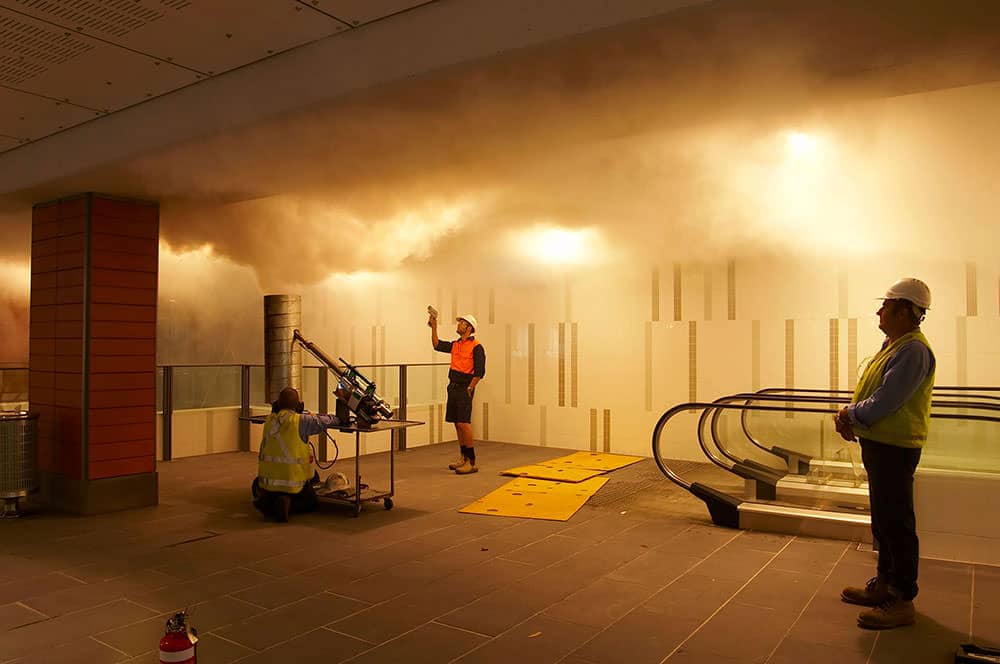
Full functional fire testing of mechanical services shall be provided as part of the Works and shall include the coordination, execution, verification, and documentation of all systems that interface with the mechanical fire and smoke control strategy.
To ensure that all systems operate correctly as an integrated whole, Flowtech National shall be engaged as the lead specialist coordinator responsible for the planning, coordination, execution, and reporting of the full functional fire test.
Scope of Coordination
Flowtech National shall act as the single point of coordination across all trades and disciplines involved in fire-mode operation, including mechanical, electrical, fire, hydraulic, controls, lift, and architectural interfaces.
Full functional fire testing shall include, but not be limited to, the coordination and verification of the following systems.
Systems Included in Full Functional Fire Testing
1. Mechanical Smoke Control and Pressurisation Systems
-
Stair pressurisation systems, including:
-
Shutdown of normal HVAC serving pressurised stairs
-
Fan start, duty/standby operation, and relief air paths
-
-
Smoke exhaust systems serving:
-
Car parks
-
Atriums
-
Malls
-
Fire compartments and large volume spaces
-
-
Lobby pressurisation and lobby relief systems
-
Sandwich (inter-zone) pressurisation systems
-
Air handling unit fire mode operation, including shutdowns, smoke control modes, and zoning
-
Fire, smoke, and combined fire/smoke dampers
-
Car park ventilation systems, including exhaust fans and jet fans where applicable
2. Fire Detection, Alarm, and Control Systems
-
Fire Indicator Panel (FIP)
-
Fire Fan Control Panel (FFCP)
-
Emergency Warning and Intercommunication System (EWIS)
-
Verification of:
-
Correct initiation of mechanical fire modes
-
Status, fault, and run indications
-
Manual override and firefighter controls where provided
-
3. Electrical and Essential Services
-
Essential and non-essential power changeover
-
Verification of mechanical plant operation on essential supply
-
Interfaces between electrical systems, mechanical plant, and fire controls
4. Fire Protection Systems
-
Automatic sprinkler systems
-
Fire hydrant systems
-
Verification that:
-
Mechanical operation does not adversely affect fire protection systems
-
Required shutdowns or interlocks operate correctly
-
No conflicts exist between smoke control and fire protection operation
-
5. Fire and Smoke Containment Systems
-
Fire curtains
-
Smoke curtains
-
Operable fire and smoke barriers
-
Verification that deployment:
-
Does not compromise pressurisation performance
-
Does not adversely affect smoke exhaust effectiveness
-
Operates in the correct sequence relative to mechanical systems
-
6. Access, Egress, and Building Interfaces
-
Door releases and electromagnetic door hold-open devices
-
Verification that:
-
Doors release correctly on fire alarm
-
Door opening forces remain within NCC limits under pressurised conditions
-
Egress paths function as intended during fire mode
-
7. Façade and Ventilation Interfaces
-
Operable louvres and smoke relief louvres
-
Verification of:
-
Correct fire mode position
-
Sequencing with pressurisation and smoke exhaust systems
-
Fail-safe operation on loss of power
-
8. Special Hazard and Critical Systems
-
Server room and special hazard gaseous fire suppression systems
-
Verification of:
-
Mechanical shutdowns and isolation
-
Pressure relief and make-up air interactions
-
No compromise to suppression system performance during activation
-
9. Lift Interfaces (Where Applicable)
-
Lift recall functions
-
Lift shaft pressurisation systems
-
Lift lobby pressurisation interfaces
-
Verification of coordinated operation with mechanical fire and smoke control systems
Fire Matrix and Test Procedures
Flowtech National shall:
-
Review the approved fire engineering report, mechanical design documentation, and fire services documentation.
-
Prepare a project-specific fire matrix (cause-and-effect schedule) covering all mechanical, electrical, fire, hydraulic, lift, and architectural interfaces.
-
Develop written full functional fire test procedures, including:
-
Defined fire scenarios aligned with the approved fire strategy
-
Step-by-step test methodology
-
Required observations and measurements
-
Acceptance criteria for each system and interface
-
The fire matrix and test procedures shall be issued to all relevant trades prior to testing.
Execution of Full Functional Fire Testing
Flowtech National shall lead and manage on-site full functional fire testing to demonstrate that:
-
Individual systems operate correctly
-
Interfacing systems operate correctly together
-
No adverse interactions occur between trades or systems
All defects, non-conformances, or interface issues shall be recorded, rectified, and re-tested.
Commissioning and Compliance Documentation
A formal full functional fire test and commissioning report shall be provided, including:
-
Verified fire matrix
-
Test methodology and scenarios
-
Observed system behaviour
-
Defects and corrective actions
-
Confirmation of compliant operation following rectification and re-testing
Documentation shall be suitable for:
-
Certifier and authority approval
-
Consultant sign-off
-
Owner and facility management handover
-
Establishment of AS 1851 baseline functional performance data
Specification Intent
The intent of this requirement is to ensure that mechanical fire-mode operation is explicitly tested, verified, and documented as a complete integrated system, rather than as isolated components.
Full functional fire testing shall be treated as an integral and mandatory part of the mechanical services scope, providing a clear, defensible record of compliance and operational performance for the life of the building.
Reviews
Comments are closed.