Profile
Dear [Client / Builder / Consultant Name],
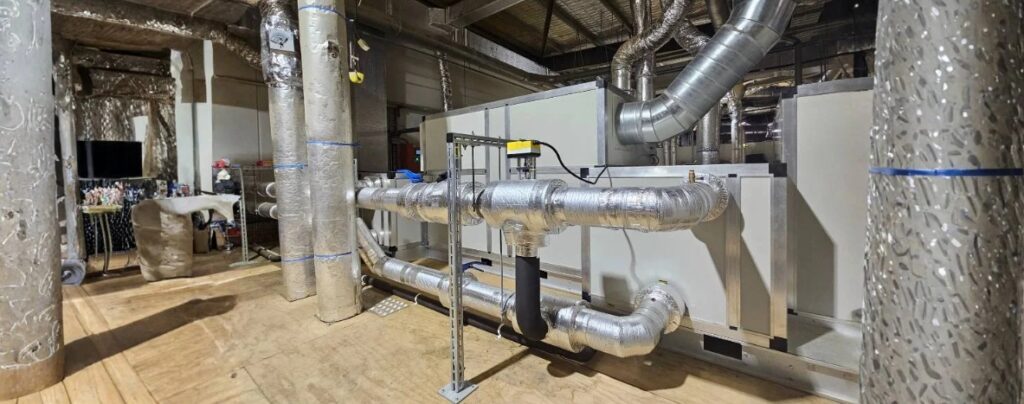
Pharmaceutical cleanrooms require precise moisture, temperature and particulate control to ensure product stability, prevent contamination, and maintain regulatory compliance. On this basis, we propose the installation of a Humiscope TFT Ultra-Dry Desiccant Dehumidifier System for the nominated Pharmaceutical Cleanroom / Weighing Room / Hygroscopic Powder Handling Area.
Humiscope specialise in engineered low-humidity environments, providing dry rooms and ultra-dry rooms for critical manufacturing processes where even minor humidity fluctuations or moisture ingress can compromise batch integrity.
1. Proposed Solution – Humiscope TFT Ultra-Dry Dehumidifier
The TFT Series is Humiscope’s pharmaceutical-grade desiccant dehumidifier suited to cleanroom-aligned room classes requiring:
-
Tight RH control (typically 1%–20% RH, depending on process)
-
Specified dew-point targets (–10°C, –20°C, –40°C and below)
-
Stable temperature / humidity envelopes for materials that are moisture-sensitive, hygroscopic, reactive or electrostatic-prone
Key Features Included in the Scope
-
High-performance TFT desiccant wheel with pharmaceutical duty capability
-
Stainless-steel internal components (where required for GMP)
-
Process & regeneration fans sized for validated airflow volumes
-
Pre-cooling / post-cooling coils and HEPA-ready air paths
-
Optional chilled-water or DX coils for temperature conditioning
-
Integrated humidity + dew-point control system
-
BMS integration for alarm, tracking & compliance records
-
Local Humiscope engineering support (concept → commissioning)
Suitable Pharmaceutical Environments
-
Weighing & dispensing rooms
-
Hygroscopic powder handling (APIs, excipients, lyophilised products)
-
Tablet compression and capsule filling areas
-
Coating rooms (humidity stability is critical to coating adhesion)
-
Stability chambers & controlled environment rooms (CERs)
-
Packaging rooms for moisture-sensitive products
-
Quality labs, R&D suites, clean storage
2. Why Pharmaceutical Cleanrooms Require Ultra-Dry Control
Pharmaceutical manufacturing carries strict humidity-related risks that are often underestimated in early design. Humiscope’s TFT system mitigates:
a) Hygroscopic material degradation
APIs and excipients absorb moisture rapidly, leading to:
-
caking
-
altered viscosity
-
potency loss
-
compromised blend uniformity
-
poor flow properties
b) Tablet & capsule stability issues
Too much moisture causes:
-
sticking to punches
-
picking, mottling, weight variation
-
soft capsules deforming
-
coating failure
c) Electrostatic discharge (ESD) & contamination
Low, controlled RH reduces ESD risks that can affect powders or micro-scale ingredients.
d) GMP compliance & repeatability
Ultra-dry, stable conditions contribute to:
-
validated batch repeatability
-
lower failure rates
-
better cleaning verification outcomes
-
reduced microbial growth risk
3. Benefits During Construction & Commissioning
a) De-risking the cleanroom build
Pharmaceutical rooms are complex: HVAC, envelope, pressurisation, HEPA filtration, vapour barrier and integration points.
Humiscope reduces builder and consultant risk via early involvement:
-
humidity load calculations
-
envelope / vapour barrier reviews
-
airflow pattern alignment with cleanroom airflow design (unidirectional or turbulent-flow)
-
door sequencing and air-lock considerations
b) Improved commissioning certainty
Ultra-dry systems require staged start-up and dew-point stabilisation.
Humiscope support:
-
dew-point ramping
-
pressurisation tuning vs cleanroom cascades
-
regeneration balancing
-
humidity mapping and verification
c) Clear demarcation for builder and FM team
Dryness failures are almost always linked to envelope leakage or mismatched HVAC settings.
This proposal formally identifies the required dryness performance so:
-
legacy humidity leaks are not inherited at PC
-
FM teams receive a validated, stable system
-
builder avoids DLP humidity disputes
4. Benefits for Facilities Management & End Users
a) Stable pharmaceutical process control
Ensures consistent processing of hygroscopic powders, granules and coated products.
b) Reduced product loss / batch failure
By avoiding moisture excursions, rework, scrapped batches and delayed release are reduced.
c) Lower microbial load
Low humidity significantly suppresses microbial activity and mould, supporting GMP cleanliness.
d) Reduced energy waste
TFT systems minimise regeneration energy and avoid simultaneous heating/cooling penalties common in non-integrated designs.
e) Local Australian support
Humiscope provide:
-
periodic dew-point verification
-
on-site technical support
-
component upgrades
-
spare parts and long-term maintenance planning
5. Why Choose Humiscope TFT vs Generic Dehumidifiers
-
Pharmaceutical-engineered dryness
Generic dehumidifiers cannot maintain GMP-grade stability at –20°C to –40°C dew points. -
Integration with cleanroom HVAC
TFT systems are engineered to coexist with:-
HEPA filtration
-
room pressurisation cascades
-
cleanroom air change rates
-
temperature control loops
-
gowning airlocks
-
-
Validated performance
Humiscope support mapping, qualification and validation steps. -
Risk-based accountability
One specialist is responsible for dryness, rather than distributed responsibility across multiple trades. -
Humiscope Experience
Humiscope bring decades of specialist experience in engineered low-humidity environments, with a strong focus on pharmaceutical cleanrooms, weighing rooms, hygroscopic material handling spaces and ultra-dry process environments. Unlike general HVAC suppliers, Humiscope operate at the intersection of humidity science, vapour-barrier integrity, desiccant technology and cleanroom integration, delivering complete dryness systems rather than standalone dehumidifiers.
In pharmaceutical applications, Humiscope understand that humidity control is not simply about comfort — it is about process integrity, batch repeatability and GMP compliance. Their project experience spans:
-
Hygroscopic API and excipient handling rooms
-
Tablet compression and capsule filling suites
-
Coating and granulation areas
-
Cleanroom weigh & dispense rooms
-
Stability and controlled-environment rooms
-
Ultra-dry research laboratories
Their expertise extends beyond equipment selection to the whole-room engineering including:
-
Dew-point driven load calculations
-
Infiltration and envelope vapour-barrier assessment
-
Airflow pattern compatibility with ISO cleanroom classifications
-
Pressure cascade coordination
-
Regeneration energy optimisation
-
Commissioning and performance verification
This systems-based approach is critical in pharmaceutical environments where even minor air leakage, incorrect air balance, or regeneration imbalance can prevent a room from achieving validated dew-point performance.
Humiscope’s specialist knowledge in desiccant wheel technology (TFT series), combined with their experience integrating dehumidification with chilled water, DX systems, and cleanroom HEPA filtration, positions them as a trusted partner for consultants, D&C contractors and facility managers delivering moisture-critical pharmaceutical spaces.
In short, Humiscope are not simply supplying equipment — they are delivering engineered dryness assurance for pharmaceutical manufacturing environments.
-
6. Suggested Next Steps
-
Define GMP environmental class
-
Cleanroom classification (ISO 7/8 or other)
-
Temperature band
-
Target RH / dew-point
-
-
Humidity load assessment
Humiscope perform preliminary:-
envelope moisture load
-
infiltration load
-
process load (powder generation, material throughput)
-
air change–related moisture entrainment
-
-
Select TFT configuration
-
Dew point target
-
Coil duties
-
Process & regeneration airflows
-
Exhaust path
-
Heat-source preference for regeneration
-
-
Mechanical & electrical coordination
-
Ductwork
-
Coil integration
-
Condensate
-
Access
-
BMS points list
-
-
Commissioning & validation plan
-
Dew-point stabilisation
-
Mapping
-
Trending integration
-
Sign-off
-
7. Technical Notes (For Drawings, Specifications, ITPs)
-
Provide a Humiscope TFT desiccant dehumidifier sized to maintain the specified pharmaceutical cleanliness class and dryness requirements.
-
The unit shall include desiccant wheel, process/regeneration fans, pre-cool and post-cool coils, heaters, sensors and controls.
-
Coordinate with cleanroom HVAC design for airflow, HEPA filtration and pressurisation.
-
All penetrations, walls, ceilings, door frames and services must meet vapour barrier continuity to achieve target dew point.
-
Provide access for wheel inspection, filter replacement and coil cleaning.
-
Commissioning shall include a 72-hour continuous dew-point and RH stability test under representative load.
-
BMS shall trend humidity, temperature, dew point and pressure to comply with GMP documentation requirements.
Find out More Pharmaceutical & Nutraceutical Humidity Control | GMP-Ready Dehumidifiers – Humiscope — Humiscope
Review Case Study: Perfect Climate for Pharmaceutical Manufacturing — Humiscope
Reviews
Comments are closed.