


Profile
Selecting the Right Filtration to Protect Kitchens, Tenants, and Base-Building Assets
Commercial kitchen exhaust systems operate in one of the most aggressive environments in any building. Grease-laden air, high temperatures, and long operating hours place constant stress on hoods, ductwork, dampers, and exhaust fans.
The performance of the entire system is heavily influenced by a single component: the kitchen hood filter. Filter selection directly affects:
-
Grease accumulation in ducts and risers
-
Performance of tenant isolation and balancing dampers
-
Exhaust fan efficiency and reliability
-
AS 1851 inspection and cleaning frequency
-
Operational risk for kitchens and landlords
This article outlines the main types of kitchen hood filters, their limitations, and why Shepherd Filters, when installed as a pre-filter in front of baffle filters, are increasingly specified as a best-practice solution in modern commercial and multi-tenant buildings.
Why Kitchen Hood Filters Matter
Kitchen hood filters are the first and most critical line of defence in a kitchen exhaust system. Their role is to:
-
Capture grease aerosols at the hood
-
Reduce the amount of grease entering ductwork
-
Protect exhaust fans and shared risers
-
Limit downstream maintenance and risk
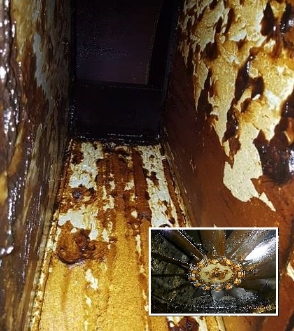
Once grease passes beyond the hood filters, it does not disappear. It deposits on:
-
Duct walls and risers
-
Tenant take-off points
-
Isolation, balancing, and backdraft dampers
-
Exhaust fan impellers and housings
This downstream contamination is the root cause of many long-term operational, maintenance, and landlord disputes.
Common Kitchen Hood Filter Types
Mesh Filters
Mesh filters rely on layered metal mesh to trap grease.
Limitations
-
Poor fine-grease capture
-
Rapid clogging
-
High grease carry-over into ducts
Outcome
Low upfront cost but high long-term cleaning and contamination risk.
Baffle Filters
Baffle filters force airflow to change direction, separating heavier grease particles.
Limitations
-
Fine grease aerosols still pass through
-
Progressive fouling of ducts and fans
Outcome
Common baseline solution, but inadequate for shared risers or high-use kitchens on their own.
Cyclone / Centrifugal Filters
Cyclone filters use centrifugal force to separate grease.
Limitations
-
Higher pressure drop
-
Performance dependent on cleaning discipline
Outcome
Improved grease removal, but inconsistent in real-world operation.
The Recommended Path: Shepherd Filters as a Pre-Filter Stage
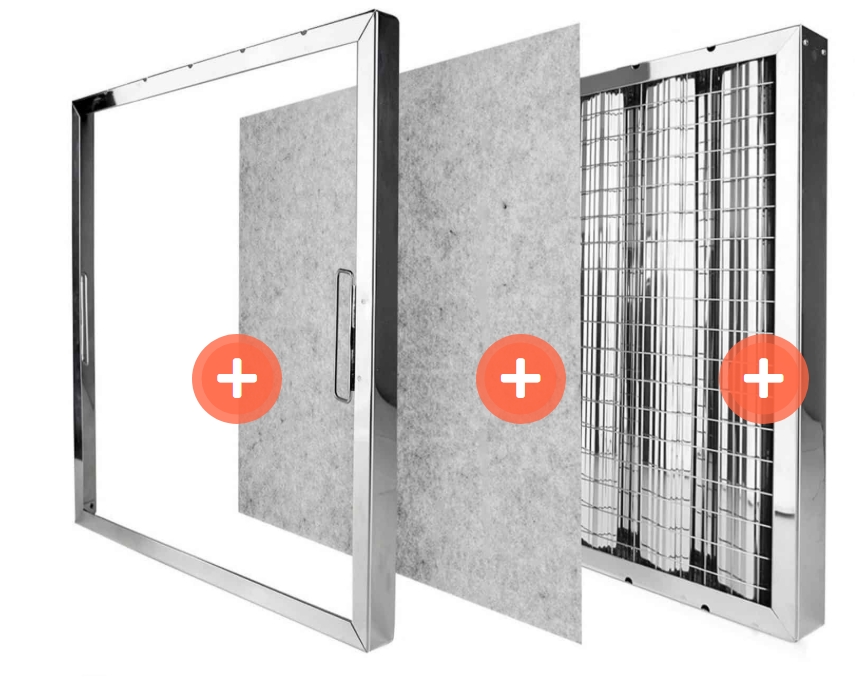
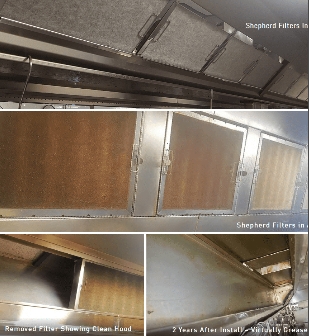
Shepherd Filters are installed in front of standard baffle filters as a high-efficiency pre-filter stage.
In this configuration:
-
Shepherd Filters capture the majority of grease aerosols first
-
Baffle filters act as a secondary safety stage
-
Significantly less grease enters the duct system
This two-stage approach provides superior protection compared to baffle filters alone.
Key Advantages
-
High-efficiency capture of both coarse and fine grease aerosols
-
Dramatically reduced grease carry-over into ductwork
-
Cleaner exhaust fans and roof discharges
-
Reduced AS 1851 cleaning frequency and intensity
-
Improved long-term reliability of the exhaust system
By removing most grease before it reaches the baffle filters, Shepherd Filters extend the service life of all downstream components.
Importance in Multi-Tenant Exhaust Systems
In shopping centres, food courts, and mixed-use buildings, multiple kitchens often connect to a shared base-building exhaust riser. These systems typically include:
-
Tenant isolation dampers
-
Balancing or volume control dampers
-
Backdraft or non-return dampers
These devices rely on free mechanical movement to maintain:
-
Correct exhaust balance
-
Odour separation between tenancies
-
Isolation capability for maintenance
Impact of Grease on Tenant Dampers
When grease is not properly captured at the hood:
-
Damper blades become sticky or fouled
-
Bearings and pivots clog
-
Dampers seize or drift out of position
This leads to:
-
Loss of exhaust balance
-
Reduced hood capture in some kitchens
-
Odour and smoke complaints
-
Increased access and maintenance costs
Using Shepherd Filters as a pre-filter significantly reduces grease reaching these dampers, helping preserve system functionality and balance.
Landlord Impact When Grease Is Not Mitigated
In most buildings:
-
The tenant owns the hood and cooking equipment
-
The landlord owns the shared riser, tenant dampers, and exhaust fan
When grease bypasses hood filtration, landlords face:
-
Contamination of shared ductwork
-
Failure or seizure of tenant dampers
-
Costly access works for cleaning or replacement
-
Disputes over responsibility and back-charging
-
Reduced flexibility in leasing adjacent tenancies
These issues often arise years after tenancy commencement, well beyond defects liability periods.
Specifying Shepherd Filters as a pre-filter helps protect base-building assets and reduce long-term landlord exposure.
Benefits for the Kitchen Operator (Tenant)
Effective hood filtration also delivers direct benefits to the kitchen:
-
More stable exhaust performance
-
Reduced smoke and heat spill into the workspace
-
Fewer unplanned shutdowns for duct or fan cleaning
-
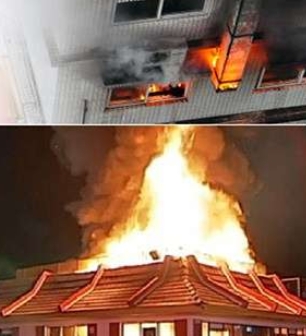
Lower internal fire risk
-
Fewer complaints from neighbouring tenants or centre management
For kitchen operators, stopping grease early improves uptime, safety, comfort, and business continuity.
Where to Specify Shepherd Filters in Project Documentation
The responsibility for grease mitigation should be clearly defined at the design and leasing stage to avoid downstream disputes and asset contamination.
1. When the Kitchen Hood Is Being Designed
(Consultant-led or D&C kitchen fitouts)
Where the project scope includes the design of the kitchen hood and exhaust system, Shepherd Filters should be:
-
Specified directly in the mechanical services design documentation
-
Shown on the hood schedule and detail drawings
-
Included in the mechanical specification as a pre-filter installed in front of baffle filters
This ensures:
-
The correct filtration system is installed from day one
-
Grease is controlled at the source
-
Base-building assets are protected
2. When Only the Base-Building Is Being Designed
(Landlord / shopping centre / shell-and-core projects)
Where the landlord designs only the shared exhaust riser and fan system, and the tenant designs the kitchen fitout later, Shepherd Filters should be:
-
Mandated in the Agreement to Lease (ATL)
-
Included in the Tenant Design Guidelines
-
Referenced in the Base-Building Mechanical Brief
Typical wording can require that:
All commercial kitchen hoods connected to the base-building exhaust system shall be fitted with high-efficiency grease pre-filters such as Shepherd Filters installed in front of baffle filters.
This approach:
-
Protects base-building ductwork, dampers, and exhaust fans
-
Reduces landlord exposure to grease-related defects
-
Sets clear expectations for all future tenants
Final Summary
Kitchen hood filters are not a minor accessory. They are a primary control point that determines how much grease enters the exhaust system and who ultimately bears the cost and risk.
Baffle filters alone allow grease to migrate downstream, impacting shared risers, tenant dampers, and exhaust fans.
Shepherd Filters, installed as a pre-filter in front of baffle filters, provide a best-practice solution by capturing grease early, protecting base-building assets, and delivering cleaner, safer, and more predictable outcomes over the life of the building.
Whether specified in the mechanical design or mandated through lease documentation, early inclusion of Shepherd Filters is a simple, low-risk decision that prevents long-term operational and compliance issues.
Reviews
Comments are closed.