Profile
A performance-led approach to noise, airflow, footprint, and compliance
Designing a VRF plantroom or rooftop condenser compound is rarely just a mechanical exercise. In residential and mixed-use projects, VRF outdoor units sit at the intersection of planning approval (DA) noise limits, tight rooftop footprints, and strict manufacturer airflow requirements tied to warranty.
This is why acoustic louvres—rather than solid acoustic screens—are increasingly the preferred solution.
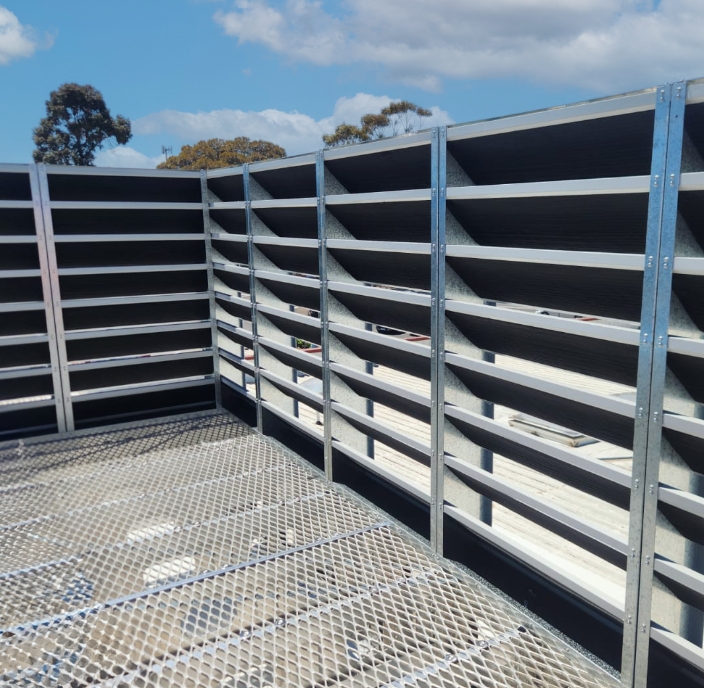
Using acoustic louvre systems from Con-Form Group as a reference, this article outlines how to design a VRF plantroom that satisfies neighbours, planners, manufacturers, and facility managers without compromising system performance.
Why acoustic louvres are suited to VRF plantrooms
1. Meeting DA noise conditions for residential neighbours
VRF condensers generate tonal fan noise and broadband compressor noise, often during night-time or shoulder-season operation when background noise levels are low. DA conditions commonly require noise limits to be met at the nearest residential receiver.
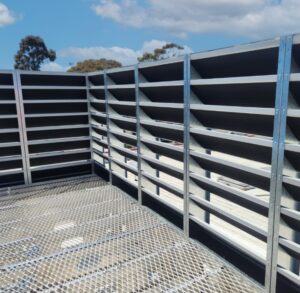
Acoustic louvres:
-
Break line-of-sight noise paths
-
Provide predictable, model-able attenuation
-
Allow acoustic consultants to treat the plantroom as a ventilated acoustic enclosure, rather than a leaky barrier
This makes them far easier to justify in DA acoustic reports than partial walls or visually screened compounds with uncontrolled openings.
2. Smaller footprint than solid acoustic screens
Traditional solid acoustic walls require:
-
Increased separation from condensers to avoid airflow restriction
-
Larger compounds to mitigate recirculation
-
Additional depth to maintain free air area
Acoustic louvres combine screening and ventilation in the same plane, allowing:
-
Louvres to be installed closer to the units
-
Shallower plant decks
-
More efficient rooftop layouts
On constrained podium roofs or narrow plant zones, this footprint reduction is often the difference between a viable VRF layout and a major redesign.
3. Preserving airflow and VRF manufacturer compliance
VRF manufacturers are explicit about:
-
Minimum clearances around outdoor units
-
Avoidance of discharge air recirculation
-
Maintaining unrestricted condenser intake airflow
Solid screens behave aerodynamically like walls. Acoustic louvres do not.
By allowing airflow through the blade profile, acoustic louvres:
-
Reduce the risk of elevated head pressure
-
Minimise capacity derating and nuisance fault trips
-
Align with the intent of VRF manufacturer airflow requirements
This materially reduces warranty and performance risk, particularly in dense rooftop compounds.
Designing the VRF plantroom: key steps
Step 1 — Lock in VRF airflow geometry first
Before drawing screens or enclosures:
-
Confirm manufacturer minimum clearances (sides, front, rear, above)
-
Identify discharge direction and recirculation risks
-
Consider prevailing winds and thermal plume behaviour
Acoustic treatments should wrap around the airflow strategy, not dictate it.
Step 2 — Use acoustic louvres as the perimeter condition
Where screening is required:
-
Use acoustic louvres to form the perimeter facing noise-sensitive receivers
-
Avoid solid return corners that trap discharge air
-
Keep the top open unless acoustic modelling specifically requires a lid
This approach controls noise while allowing heat to escape vertically, reducing thermal build-up.
Step 3 — Size the louvre system to minimise airflow penalty
Acoustic louvres always involve a trade-off between noise attenuation and airflow. Good outcomes depend on:
-
Adequate permeable wall area
-
Sufficient separation between condenser coils and the louvre wall
-
Avoiding double screening (e.g. solid balustrade + acoustic louvre)
Early coordination between mechanical and acoustic consultants is critical here.
How Con-Form’s technical resources support the design process
Designing a VRF plantroom with acoustic louvres is a coordination task across acoustics, airflow, structure, architecture, and maintenance. This is where the depth of technical resources provided by Con-Form materially reduces design and delivery risk.
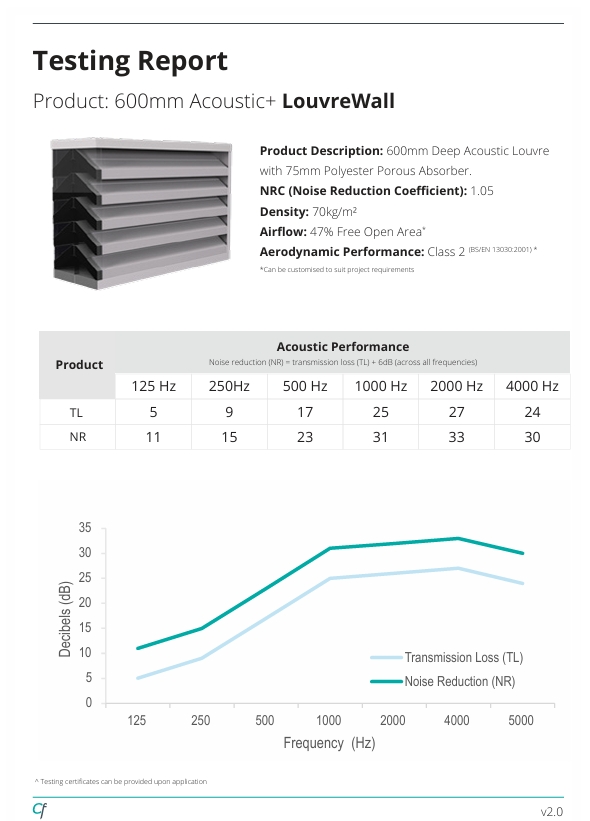
Acoustic performance data – enabling early DA modelling
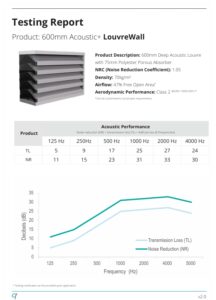
Con-Form acoustic louvre systems are supported by published performance data, including:
-
Noise reduction ranges
-
Absorption characteristics (e.g. NRC values)
-
Defined blade geometries
Design value:
-
Allows acoustic consultants to model the plantroom early and defensibly
-
Reduces late redesign when DA conditions tighten
-
Supports consistent assumptions from concept through to construction
Airflow transparency data – supporting VRF warranty compliance
Con-Form publishes airflow-related characteristics for its louvre systems, distinguishing between:
-
Visual screening louvres with high airflow openness
-
Acoustic louvres designed to attenuate noise while remaining breathable
Design value:
-
Enables designers to demonstrate that screening is ventilated, not equivalent to a solid wall
-
Aligns architectural intent with VRF manufacturer airflow requirements
-
Reduces risk of recirculation-related performance issues
CAD and BIM resources – improving coordination
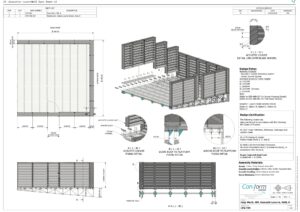
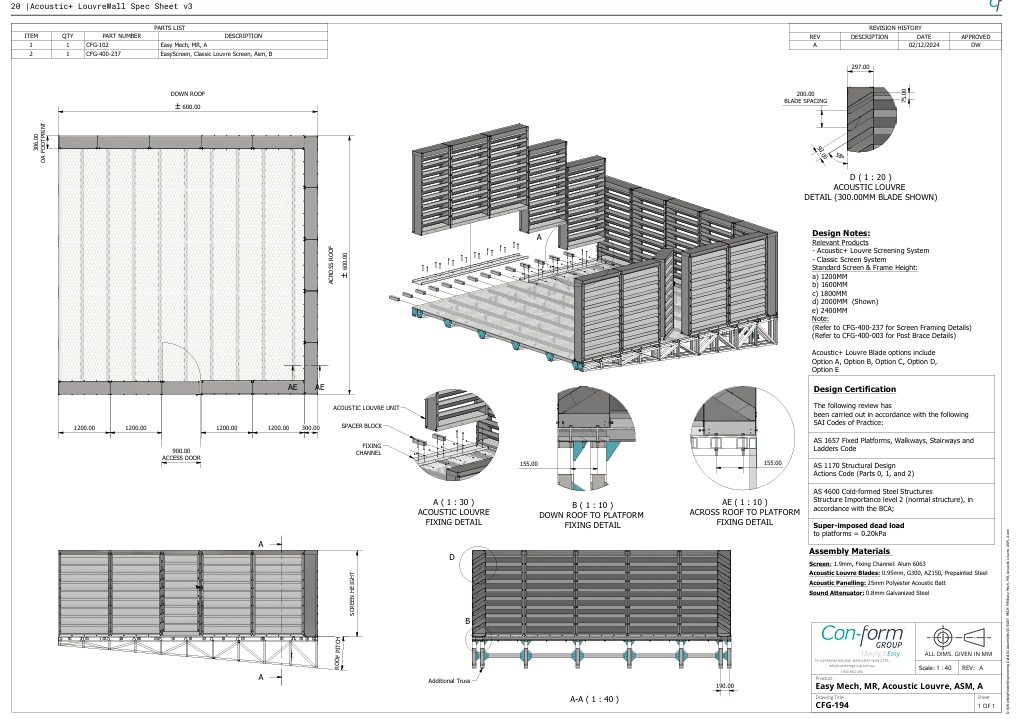
Con-Form provides CAD drawings and digital design resources suitable for:
-
Rooftop and plantroom layouts
-
BIM coordination models
-
Architectural façade integration
Design value:
-
Accurate geometry for clash detection
-
Early resolution of fixing zones and structural loads
-
Reduced need for site-driven changes
For VRF plantrooms with tight tolerances, accurate digital representation is critical.
Modular systems and typical details – improving constructability
Acoustic louvres are often assumed to be bespoke. Con-Form’s modular approach provides:
-
Repeatable panel sizes
-
Defined fixing methods
-
Prefabricated assemblies suitable for rooftop installation
Design value:
-
Improved buildability
-
Reduced site fabrication risk
-
Greater confidence that installed performance matches the acoustic model
Specification-ready documentation – simplifying consultant deliverables
Technical documentation includes:
-
Spec sheets
- Test Data
-
Installation manuals
-
Warranty information
Design value:
-
Test Data assists in coordination with Acoustic Engineer
-
Reduces RFIs during tender and construction
-
Provides objective compliance criteria for inspections
Installation manuals – protecting acoustic and airflow outcomes
Correct installation is essential to both noise attenuation and airflow performance.
Design value:
-
Reduces risk of blocked airflow paths
-
Ensures blade orientation matches design intent
-
Protects long-term VRF reliability and acoustic compliance
Warranty documentation – supporting lifecycle performance
Long-term warranties are particularly relevant where:
-
Acoustic louvres form part of DA compliance
-
Plantrooms serve residential or mixed-use developments
Design value:
-
Reduced lifecycle risk for owners and facility managers
-
Confidence that acoustic compliance will be durable over time
Why this matters for VRF systems specifically
VRF condensers are sensitive to:
-
Airflow restriction
-
Heat build-up
-
Poor compound geometry
Acoustic louvres must therefore function as:
-
An acoustic control measure
-
An airflow management element
-
A compliance interface between planning, architecture, and mechanical design
With robust technical resources, acoustic louvres become an engineered component of the mechanical system, not an architectural afterthought.
Conclusion
Acoustic louvres are not just about making VRF plant quieter. When designed correctly, they:
-
Help satisfy DA conditions for residential neighbours
-
Reduce plantroom footprint compared with solid screens
-
Preserve airflow and simplify VRF manufacturer compliance
-
Lower performance, warranty, and lifecycle risk
Using well-documented systems such as those from Con-Form allows consultants to design VRF plantrooms that are quieter, more compact, and more reliable—without compromising the fundamentals of VRF performance.
Learn More: Acoustic+ LouvreWall | Ventilated Acoustic Screens
Reviews
Comments are closed.