Profile
Engineered Ventilation, Acoustic Control & Fresh Air Systems — Manufactured in Australia
In the current Australian HVAC environment, ventilation is no longer a secondary design consideration. It sits at the centre of compliance, occupant wellbeing, acoustic performance, and asset risk management.
Within that context, Sigrist Design operates not as a reseller of imported equipment, but as an Australian manufacturer of ventilation and acoustic systems engineered specifically for local conditions, retrofit realities and contracting pressures.
Their product portfolio spans:
-
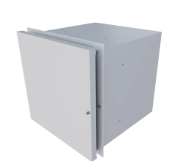
Filtered Air Supply Units (FASU)
-
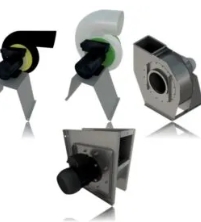
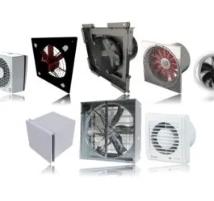
Commercial and industrial fans
-
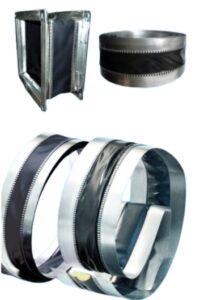
Acoustic attenuators and silencers
-
Cross-talk silencers
-
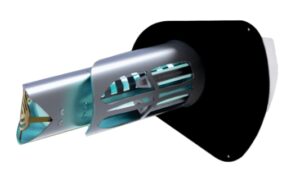
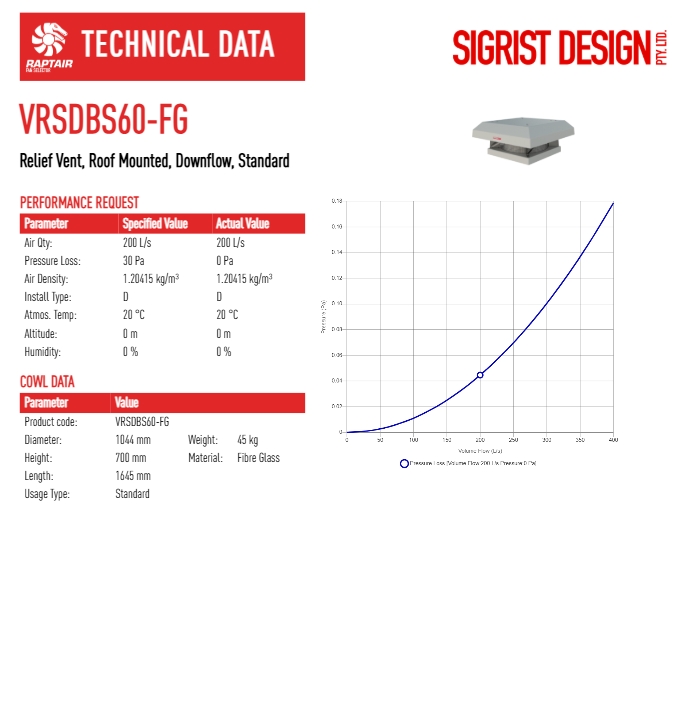
Roof cowls and airflow terminals
-
Custom fabricated ventilation assemblies
What distinguishes Sigrist is not the existence of these product categories — many suppliers offer fans or silencers — but the fact that they are fabricated locally, dimensionally adaptable, and deployable in constrained retrofit environments where precision matters.
Ventilation Compliance & the Rise of Dedicated Outdoor Air
Ventilation design has evolved significantly under the performance expectations of the National Construction Code and the outdoor air provisions of AS 1668.2.
In legacy buildings — particularly schools and smaller commercial offices — mechanical fresh air was often never incorporated into the original HVAC design. Split systems and VRF installations addressed sensible load but not controlled outdoor air introduction.
Sigrist’s Filtered Air Supply Unit (FASU) platform exists within this precise design gap.
Acoustic Control — A Commissioning Risk Often Discovered Too Late
Ventilation noise remains one of the most common causes of post-occupancy dissatisfaction, particularly in classrooms, medical consulting suites and tenancy-separated commercial offices.
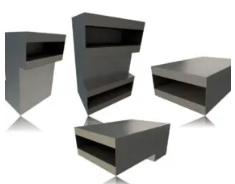
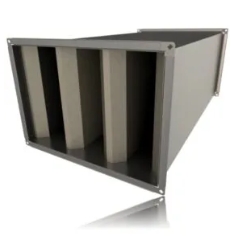
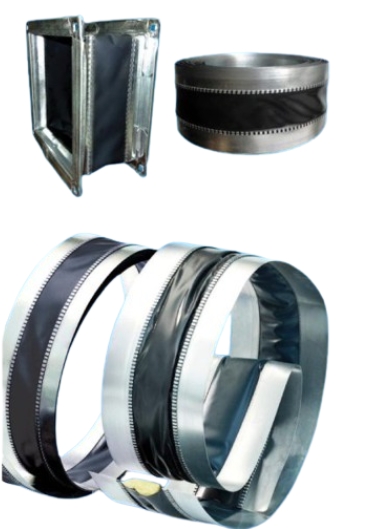
Sigrist manufactures rectangular attenuators, circular silencers and cross-talk silencers in multiple geometries — straight, L-shaped, U-shaped and Z-shaped — enabling integration within ceiling void constraints without compromising acoustic intent.
The importance of this capability becomes clear at design stage. Acoustic attenuation is not simply about insertion loss values. It is about balancing regenerated noise, pressure drop penalties, breakout transmission and fire compartment interface integrity. Cross-talk attenuation, in particular, plays a decisive role in maintaining speech privacy between adjacent rooms even where wall ratings are compliant.
Where attenuation is sourced generically or late in procurement, the risk profile increases: dimensional clashes, unverified acoustic data, or static pressure shortfalls can emerge at commissioning. Local fabrication mitigates that uncertainty and allows acoustic treatment to be treated as an integrated design component rather than a bolt-on accessory.
Fans, Cowls & Airflow Terminals
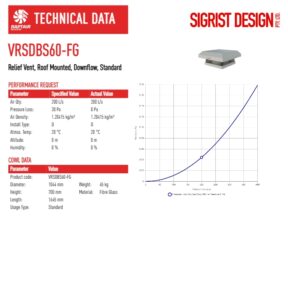
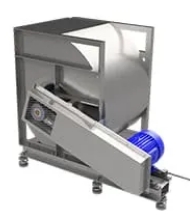
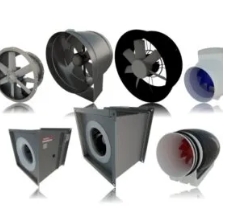
Sigrist’s broader ventilation platform includes mixed flow, centrifugal and axial fans, alongside roof-mounted exhaust and supply units and a range of cowls and airflow terminals.
These components directly influence:
-
System static pressure calculations
-
Exhaust plume recirculation risk
-
Rain ingress performance
-
Structural coordination at roof level
-
Discharge velocity and intake separation compliance
In rooftop environments especially, terminal device selection affects both aerodynamic performance and long-term asset durability. The advantage of local manufacture lies in dimensional tailoring and the ability to coordinate discharge geometry with project-specific architectural constraints.
Industrial & Process Air Management Solutions — Ventilation, Dust Collection & Spray Booth Systems
In heavy industrial and process environments, ventilation challenges extend far beyond simple supply and return air handling. They intersect with dust management, particulate control, operator health, hazardous zone compliance, equipment longevity and energy use — making the selection and integration of industrial ventilation systems a complex engineering task.
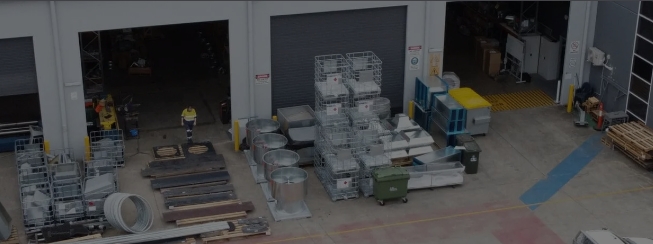
Sigrist Design applies its 30+ years of Australian engineering heritage to these challenges with a suite of purpose-designed industrial airflow systems, including pulse-jet dust collectors, spray booth ventilation and filtration systems, and a comprehensive set of services encompassing design, build, installation and ongoing servicing for dust and fume management.
What This Means for Consulting Engineers
Specifying locally manufactured ventilation and acoustic systems reduces exposure to:
-
Extended international freight delays
-
Dimensional substitution during shop drawing review
-
Late acoustic failures
-
Pressure drop mismatches
-
Limited technical clarification access
It provides earlier access to fabrication-aware feedback during design development and improves confidence that performance assumptions made at schematic stage will survive procurement.
In education projects especially — where IAQ and acoustic comfort now carry reputational and political sensitivity — certainty matters.
What This Means for Contractors
For D&C contractors, programme certainty is margin protection.
Local manufacturing reduces reliance on volatile shipping schedules and allows faster clarification during shop drawing review. Custom fabrication enables resolution of spatial clashes without re-engineering entire plant layouts.
Integrated assemblies — such as fan plus attenuator modules — reduce on-site coordination complexity. When programme windows are compressed (for example, school holiday installation periods), shorter procurement cycles and responsive manufacturing become commercially decisive.
What This Means for Facilities Managers & Asset Owners
At operational stage, ventilation systems become long-term liabilities or assets.
Accessible filter maintenance, serviceable fan configurations, and readily available locally sourced components reduce lifecycle uncertainty. Improved acoustic control reduces occupant complaints. Dedicated outdoor air systems improve IAQ perception without requiring full plant overhaul.
For asset owners managing education portfolios, this balance between compliance, comfort and cost containment is fundamental.
Industry Presence & Sector Recognition
Sigrist Design has been featured in Climate Control News in relation to large-scale education fresh air installations. More importantly than media coverage, their systems have been deployed across thousands of Australian classrooms — a practical recognition of capability within the education sector.
Their presence is project-driven rather than award-centric — embedded in operational facilities rather than promotional campaigns.
Strategic Position in the Market
This position — locally engineered, fabrication-capable, ventilation-focused — is particularly valuable in refurbishment environments where agility, dimensional flexibility and acoustic precision outweigh brand scale.
Engineering Conclusion
Ventilation in Australia is moving toward higher accountability: increased outdoor air rates, stronger IAQ scrutiny, tighter acoustic expectations and greater programme risk awareness.
Within that landscape, Sigrist Design provides engineered ventilation and acoustic systems manufactured locally and deployed pragmatically — particularly within education retrofits and constrained commercial projects.
It is not simply a product range.
It is a risk-managed pathway to ventilation compliance and acoustic control in real-world Australian buildings.

Map
Sorry, no records were found. Please adjust your search criteria and try again.
Sorry, unable to load the Maps API.
Reviews
Comments are closed.